
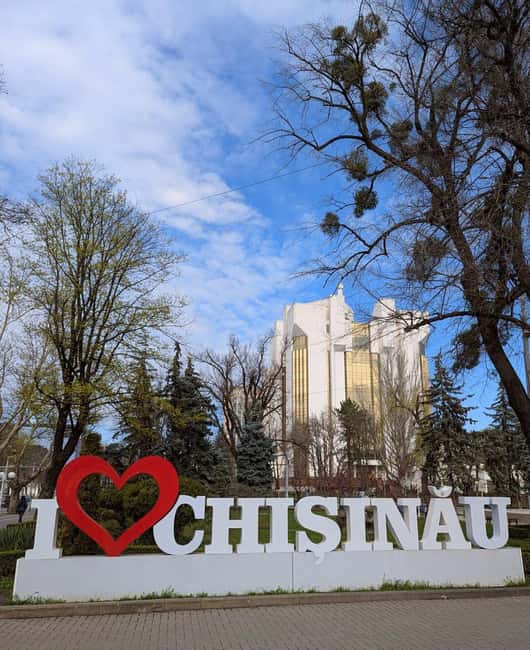
Reviewed · CHISINAU CITY TOURS
Chisinau Private City Tour
Some cities need a bus to see them. Chisinau needs your feet.
This private walking tour takes you through imperial, Soviet, and brutalist architecture, plus quiet streets and courtyards with street art, with a local guide who explains how the city layered Jewish, Armenian, and Bulgarian influences over time.
I like that it’s designed for real orientation, not just photos. You cover the main boulevard, Stefan cel Mare, key cultural buildings, and the parks people actually use, then you slow down for the side streets where Chisinau feels less staged.
One thing to consider: this is a walk-heavy plan. It is not suitable for people with mobility impairments and it is also marked as not suitable if you have a cold, so plan around your energy and weather.
In This Review
- Key highlights worth knowing before you go
- Walking Chisinau like a local, not a checklist
- Meeting point to first stop: starting with history at the Military History Museum
- Triumphal Arch and the early boulevard rhythm
- Stefan cel Mare Boulevard: the “main stage” with real context
- Two central parks, plus a calmer side of Chisinau
- Opera and churches: culture stops that feel personal
- Presidential Palace and Parliament: power, proximity, and perspective
- Hidden courtyards, street art, and the souvenir market walk
- Private pacing, languages, and the comfort of a small group
- Price and value: is $77 per person worth it?
- What to bring, and how to handle the walking time
- Who should book this Chisinau private city tour
- Should you book it?
- FAQ
- How long is the Chisinau private city tour?
- Is the tour walking-only?
- What languages are the live guides available in?
- Is this a private group tour?
- What is included in the tour?
- Are meals included?
- Is it suitable for people with mobility impairments or for people with a cold?
Key highlights worth knowing before you go
- Private guide, local lens: English, Russian, or Romanian guidance with a personal, informal feel
- Stefan cel Mare boulevard focus: administrative and cultural buildings on the main drag
- Parks plus cathedrals: Cathedral Park, plus Stephen the Great Central Park, with church stops along the way
- Hidden courtyards, street art, and atmosphere: you get off the main streets for quieter, greener pockets
- Multicultural stories: Jewish, Armenian, and Bulgarian influences come up as part of the route
- You will see monuments with controversial histories: context is part of the experience, not an afterthought
More circuits of the capital:
- Best of Chisinau Private City Tour
★ 5.0 · 68 reviews - Chisinau Walking Tour with Local Guide
★ 4.9 · 30 reviews - Chisinau: Discover City Highlights with a Walking Tour
★ 4.9 · 18 reviews - Private Walking Tour of Chisinau
★ 5.0 · 9 reviews - Walking Tour of Chisinau with Local Guide
★ 4.0 · 6 reviews
Walking Chisinau like a local, not a checklist
Chisinau is one of those capitals where the city mood comes from small things. The way courtyards sit behind main roads. The shift from wide boulevards to narrow green streets. The mix of styles you can spot with your own eyes as you move.
This tour works because it is built around walking. You get your bearings fast, you learn the city’s “why,” and you notice details you would usually miss if you only hop between big landmarks. Because it’s private, you can ask questions as you go, instead of waiting for a group to catch up.
You also get structure without feeling rushed. The schedule is compact at 2.5 hours, but it still leaves room for context at each stop. That matters in Chisinau, where history is tied to buildings, monuments, and the changing mix of communities.
If you like cities where the past and present sit side by side, you will probably enjoy this format.
Meeting point to first stop: starting with history at the Military History Museum
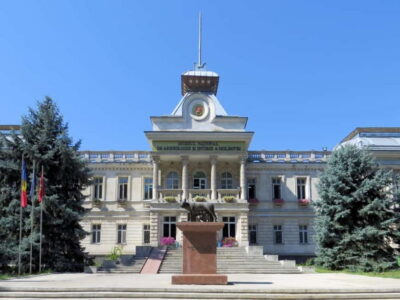
You begin in Chișinău with pickup at your chosen location. Then the tour opens with the Military History Museum for about an hour of guided time.
Why that first stop is smart: it gives you a framework before you start seeing symbols around town. Even if you are not a history nerd, learning the basic timeline helps the rest of the walk make sense. Chisinau has layers, and monuments or architecture choices land harder when you know what shaped them.
After the museum, the pace shifts from deep context to quick impressions as you move through the center. It’s like turning on the explanation volume early, then lowering it so you can enjoy the sights.
One practical note: an hour inside a museum is part of the plan. If you get cold easily, dress for indoor temperature too.
Triumphal Arch and the early boulevard rhythm
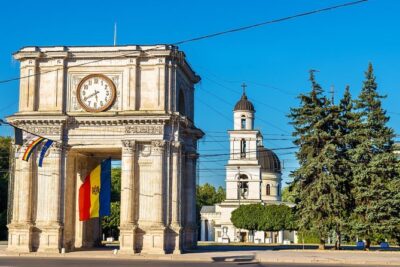
From the museum, you head toward the Triumphal Arch, which is a shorter guided stop (around 10 minutes). Think of it as a visual anchor. The idea is to spot a major landmark, then keep going so you are not stuck in one place for too long.
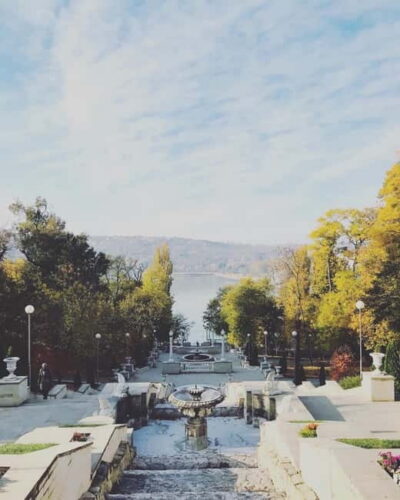
Then you move into a park setting with Cathedral Park (about 20 minutes). This pairing is useful. Architecture-heavy segments can feel flat when you walk non-stop. Parks reset your eyes and give you that local rhythm, with space to pause and take in how the city breathes.
You also start picking up the tour’s main theme: Chisinau evolved through different eras and political realities, and the streets reflect that. As you go, your guide ties buildings and public spaces to the city’s multicultural past and post-Soviet identity.
Stefan cel Mare Boulevard: the “main stage” with real context
The heart of the tour is Stefan cel Mare Boulevard. This is where you spend time viewing administrative and cultural buildings and learning how the city’s public face was shaped.
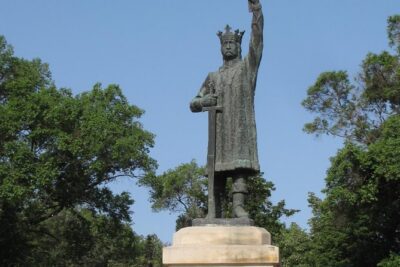
You also reach the main square of the General National Meeting, plus additional moments along the boulevard where the guide explains monuments with controversial histories. You should expect a mix of awe and discomfort here, depending on your views, because the point is not to sanitize the past. The value is in hearing the story behind the stone, rather than just seeing the stone.
Also, you will notice how the guide balances big-picture history with street-level observation. You get local insights into everyday life, not just dates. That can be surprisingly helpful when you later wander on your own. You start to understand which streets are meant for movement, which ones are quieter, and where the city’s social life leaks out into the sidewalks.
As the tour moves along, you also pick up the architectural blend: imperial influences, Soviet-era planning, and brutalist lines. You do not need an architecture degree. Your guide points out what to watch for, and the walking route makes the comparisons feel natural.
More that goes out just for you:
Two central parks, plus a calmer side of Chisinau
Chisinau has open spaces, and this tour makes sure you do not miss them. Along the route you get time at Cathedral Park, then later at Stephen the Great Central Park (about 20 minutes).
What I like about this structure is that parks are not treated as a break from the “real” sights. They are part of the city’s identity. You see how public spaces function, where people slow down, and how greenery softens the harder edges of the built environment.
Stephen the Great Central Park is especially useful if you want a sense of scale. It helps you understand Chisinau beyond monuments. You can also use the time here to regroup, check your photos, and decide what you want to explore deeper after the tour.
If you are traveling in winter, parks can feel bracing. The single review I have includes a note about visiting during cold weather and still enjoying the tour. Dressing smartly matters because you are moving between sites, not sitting in one place the whole time.
Opera and churches: culture stops that feel personal
The tour includes a visit to the Chisinau Opera and Ballet Theatre for about 15 minutes. Even if you are not planning to attend a performance, this kind of stop works because it shows how Chisinau projects culture. You can often tell a lot about a city by how it builds for the arts.
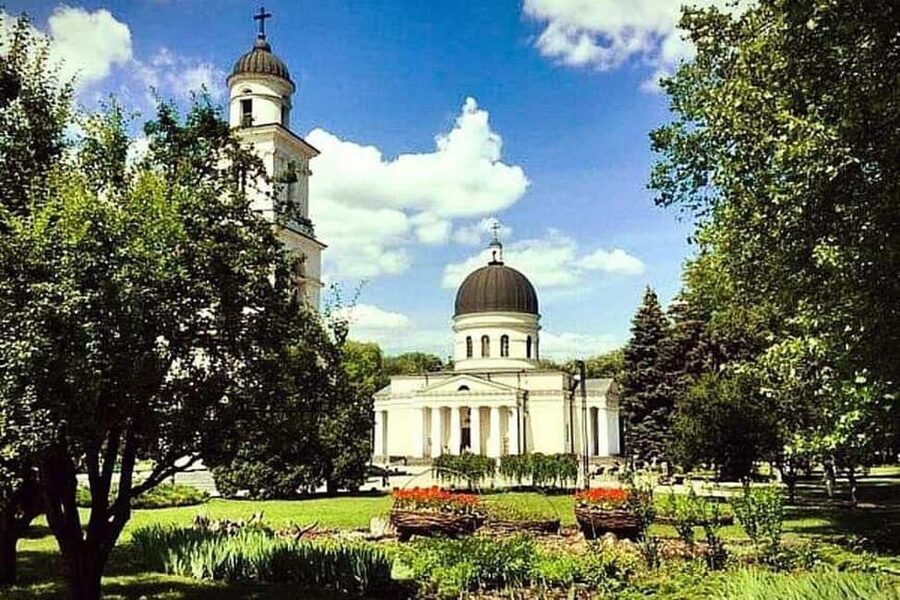
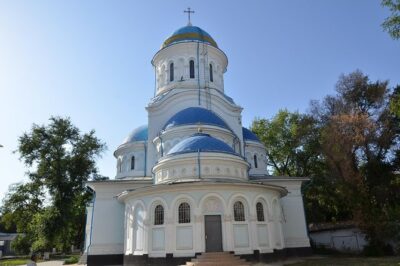
Then you move to the Metropolitan Cathedral of Christ’s Nativity (around 20 minutes guided). Church visits in cities with layered histories are rarely just about the building itself. They become part of the story of identity and continuity, especially when your guide is talking about the city’s evolution and the communities that shaped it.
One thing to watch: these are guided moments, not free time marathons. That’s good for most people, because it keeps the tour from turning into a shuffle through rooms. You will leave with a sense of what you just saw and why it matters.
If you care about symbolism, architecture, and how religion shows up in public life, these stops are a strong reason to book this particular itinerary.
Presidential Palace and Parliament: power, proximity, and perspective
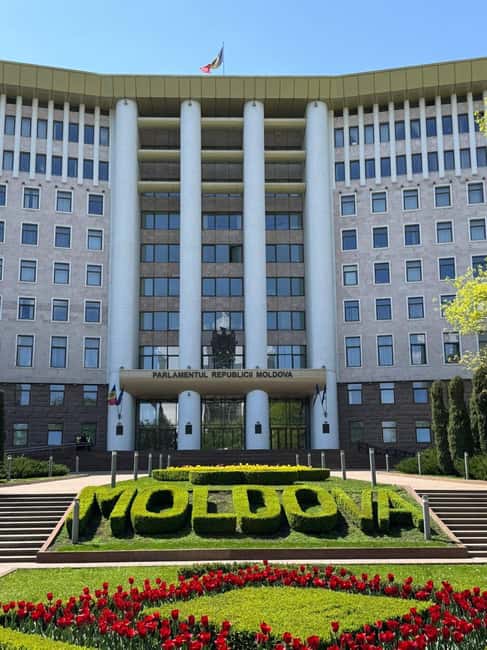
Later on, you visit the Presidential Palace (about 10 minutes) and the Parliament of Moldova (about 10 minutes). These are short visits, but that’s the point. You are not touring offices for hours. You are getting the street-level experience of seeing where decisions happen and how government buildings shape the atmosphere around them.
Because the tour also includes context for monuments with controversial histories, these stops feel less like sightseeing and more like interpretation. You start to understand why certain areas were built for visibility, authority, and public gathering.
You should also expect the guide to connect what you see to the broader story of Chisinau becoming a post-Soviet capital. Without that framing, government buildings can feel like generic monuments. With it, they become part of the city’s transformation.
Hidden courtyards, street art, and the souvenir market walk
After the major landmarks, you get what many visitors crave but rarely plan well: the in-between places.
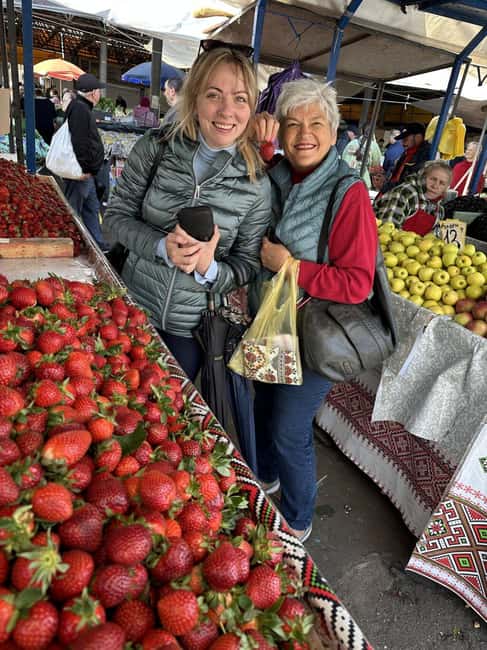
The tour explicitly includes hidden courtyards with street art, plus time to browse a market of souvenirs. This is where Chisinau stops feeling like a sequence of big structures and starts feeling like a living city. Courtyards are often where you see everyday architecture and community life. Street art adds a modern layer, showing that the city’s story keeps moving.
A souvenir market stop can be hit or miss on tours. Here, it likely works because it’s paired with side streets and quieter blocks, so it feels like part of the walk instead of a forced shopping moment.
If you want photos with texture, street corners with character, and a chance to talk with locals through the vibe of the stalls, this segment is a good use of your time.
Private pacing, languages, and the comfort of a small group
This is a private group tour. That changes the experience in a practical way: you can ask follow-up questions and get explanations that match what you care about. If you love architecture, you can focus on styles and details. If you prefer social history, you can steer the conversation toward multicultural influences and city evolution.
Languages offered are English, Russian, and Romanian. That matters in Moldova, because you might hear subtle meaning in the guide’s explanations, and it can shape how you perceive the buildings and stories.
The tour also notes it has an atmosphere like walking with a friend, which lines up with the tone of the only verified review. The reviewer specifically praised Natalia and the chauffeur as genuinely friendly, and said the visit stayed enjoyable even in the cold. That kind of human warmth is not a small detail. On a walking tour, it changes the whole feel.
Price and value: is $77 per person worth it?
At $77 per person for 2.5 hours, you are paying for a guided route with a private group format, multiple key stops, and guided time at indoor and landmark locations. What makes the price feel reasonable is that the tour is not just a “pass-by” show.
You get:
- a full guided hour at the Military History Museum
- guided stops across the central boulevard area
- time for two central parks and church visits
- walking segments that include courtyards and street art
- a guide who tells the multicultural story behind what you see
In other words, you are buying concentration. The city’s meaning comes from connecting sights. This tour gives you those connections in a short time window.
Meals are not included, so plan a snack or arrange lunch separately if you’re hungry later. But for a half-day style outing, $77 can be solid value if you want context and route design done for you.
Also note: it includes skipping the ticket line. That can save time in a busy day, and it reduces stress so you can enjoy the route.
What to bring, and how to handle the walking time
This tour is conducted on foot, so bring comfortable shoes first and a camera second. The tour is short enough that you can handle it if you are fit, but it is still a steady walk between sites.
Weather matters. The tour is marked as not suitable if you have a cold, which is a reminder that it is not intended for someone who needs to take frequent breaks or stay indoors. Dress for the day you book.
If you tend to get tired from walking, consider timing. You may want this earlier in your visit to Chisinau, so you get orientation. Or place it early on a day with flexible plans, so you are not forced to run straight to the next activity without recovery time.
Who should book this Chisinau private city tour
I think this tour is a great match if:
- you like architectural variety and want to understand what you are seeing (imperial, Soviet, brutalist)
- you want a guided explanation of Chisinau’s multicultural past, including Jewish, Armenian, and Bulgarian influences
- you enjoy short stops at major landmarks but still want quieter streets, courtyards, and street art
- you prefer a private, personal feel and you will actually use the chance to ask questions
You might skip it if:
- you cannot handle a walk-heavy schedule
- you are traveling while sick with a cold, since the tour is marked as not suitable
- you only want free time and minimal guidance, because this is structured around guided visits
Should you book it?
If you only have a couple of hours in Chișinău and you want more than a list of sights, I would book this tour. The route is built around the center, parks, cultural buildings, and then the quieter courtyards where Chisinau turns more human. The museum start adds context, and the guide-led stories help you read the city instead of just looking at it.
The $77 price feels fair when you consider the guided museum hour, the walking plan, and the private format. And the friendliness mentioned in the review, including Natalia and the chauffeur, is exactly what you hope for on a cold-weather walk: a guide who keeps the experience comfortable and worthwhile.
If that sounds like your style, this is an efficient and genuinely informative way to get oriented in Chisinau.
FAQ
How long is the Chisinau private city tour?
The tour lasts about 2.5 hours.
Is the tour walking-only?
Yes. It is conducted on foot, so you should plan on comfortable walking shoes.
What languages are the live guides available in?
The live tour guide is available in English, Russian, and Romanian.
Is this a private group tour?
Yes, it is a private group.
What is included in the tour?
It includes a walking tour, stops at Stefan cel Mare Boulevard and the main square of the General National Meeting, visits to two central parks and city churches, exploration of hidden courtyards with street art, stories of Chisinau’s multicultural past, monuments with controversial histories, and local insights into everyday life.
Are meals included?
No. Meals and drinks are not included.
Is it suitable for people with mobility impairments or for people with a cold?
No. The tour is marked as not suitable for people with mobility impairments and not suitable for people with a cold.
Newest on the Chisinau list
- Private Driver to Bucharest from Chisinau – Kishinev (Moldavia)★ 5.0 · 1 review
- Chisinau: Ladies-Only City Tour with Shopping & Meal★ 5.0 · 1 review
- 2.5 hours Walking City tour Chisinau Moldova★ 5.0 · 1 review
- Visit Chateau Purcari Winery and Marta & Maria Monastery★ 5.0 · 1 review
- Welcome to Chisinau★ 5.0 · 1 review
- Transnistria – Discover Soviet style and inspiration★ 5.0 · 1 review
- Tour of Capriana Monastery, Honey Mansion & Crama Mircești Winery★ 5.0 · 1 review
Chisinau City Tours, compared.

City Tour of Chisinau &Old Orhei Archeological complex
Read our review →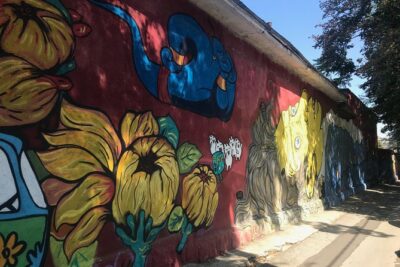
Browse the lists this tour appears in