
Reviewed · CHISINAU CITY TOURS
Chisinau Walking City Tour
Chisinau shines more on foot. I like how the walk builds a clear loop of key sights, starting at the Kilometre Zero marker, and I also like how it spotlights big civic landmarks like the Presidential Palace with story-led commentary. The one drawback is simple: in about three hours you cover a lot of ground, so it is not the best pick if you want long, slow photo breaks.
You meet your guide at Hotel Chişinău in the evening (start time 5:30 pm), then head into the centre for a compact, small-group city overview. The route mixes grand architecture, churches, and theatres, so even if this is your first time in Moldova’s capital, you should come away with a good sense of how the city is arranged and what mattered enough to shape it.
In This Review
- Quick hits from the walk
- Where you start and how the 3-hour pace feels
- Central Post Office and the Kilometre Zero marker
- Great National Assembly Square and Cathedral Park
- Churches that carry names and eras: Nativity and the Transfiguration Church
- National Opera and Ballet Theatre Maria Biesu: culture with a calendar
- Civic power on display: Presidential Palace and the surrounding ministry buildings
- The open-book Parliament and the Hertz building
- Cinema Patria, plus theatre life at Mihai Eminescu
- City Hall and the Organ Hall, where a bank became music
- Stefan cel Mare Public Park, the monument, and Government House
- Open-air vernissage for souvenirs, and what to buy on a walk
- Price and value: is $52.72 worth it?
- Who this Chisinau walk suits best (and who should skip)
- Should you book the Chisinau Walking City Tour?
- FAQ
- How much does the Chisinau Walking City Tour cost?
- How long is the tour, and what time does it start?
- Where do we meet, and where does the tour end?
- What is included in the price?
- What is not included?
- How large is the group?
- Is there a mobile ticket, and when will I get confirmation?
- Can children join, and are service animals allowed?
- Can I cancel for a full refund?
Quick hits from the walk
- Kilometre Zero in front of the Central Post Office, marking distances from Chisinau to other capitals
- Great National Assembly Square and Cathedral Park, where public gatherings and the dominant cathedral church meet
- A chain of landmarks on Stefan cel Mare si Sfint Boulevard, including City Hall, theatres, and major civic buildings
- Architecture that teaches as you go, like the Parliament building shaped like an open book
- Organ Hall created from a former City Public Bank, restored and transformed in 1975
- Open-air vernissage for souvenirs, a practical place to grab local gifts during the walk
More circuits of the capital:
- Best of Chisinau Private City Tour
★ 5.0 · 68 reviews - Chisinau Walking Tour with Local Guide
★ 4.9 · 30 reviews - Chisinau: Discover City Highlights with a Walking Tour
★ 4.9 · 18 reviews - Private Walking Tour of Chisinau
★ 5.0 · 9 reviews - Walking Tour of Chisinau with Local Guide
★ 4.0 · 6 reviews
Where you start and how the 3-hour pace feels
This is designed as a centre-of-town circuit, not a long out-and-back. You start at Hotel Chişinău, Bulevardul Constantin Negruzzi 7, and the tour ends back at the same meeting point. The start time is 5:30 pm, so you get a late-day walk when you still have enough light for photos at most stops.
The group is capped at 48 people, and the tour is described as small-group. That matters because it keeps the guide talk clear while you move from stop to stop. The pace is also the main thing to consider. Three hours is plenty for a highlights tour, but it is still a walking city experience, so good shoes matter.
Central Post Office and the Kilometre Zero marker
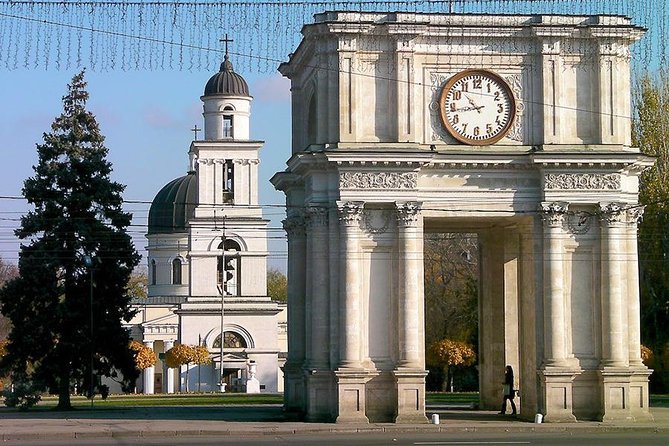
The tour kicks off at the Central Post Office building, a fitting start because it is tied to the idea of distance and connection. In 2012, a symbolic Kilometre Zero marker was installed in front of the building. It indicates the distance from Chisinau to other capital cities around the world.
This stop is more than a quick photo moment. It gives you a reference point before you start interpreting everything else you will see, like what is central, what is ceremonial, and what is meant for public life. If you like small details that explain how a place thinks about itself, this is a strong opening.
Great National Assembly Square and Cathedral Park
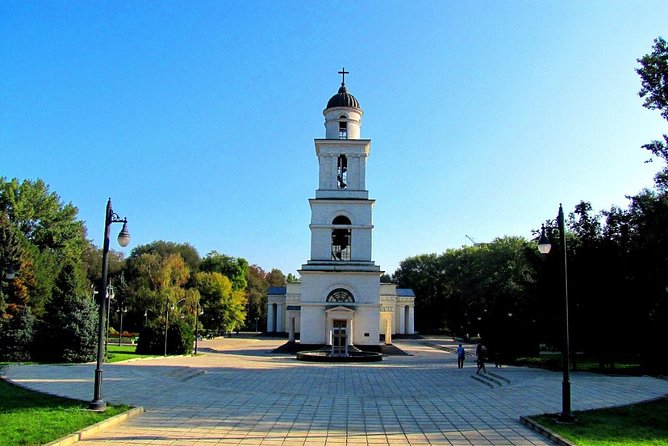
From the start, you move toward Great National Assembly Square, a place described as the venue for festive events, celebrations, and public gatherings. Even if you just pass through, it helps to know this square is built for crowds and announcements, not quiet wandering.
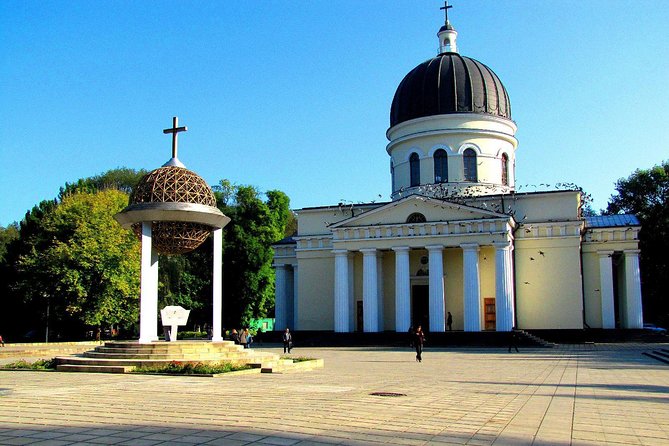
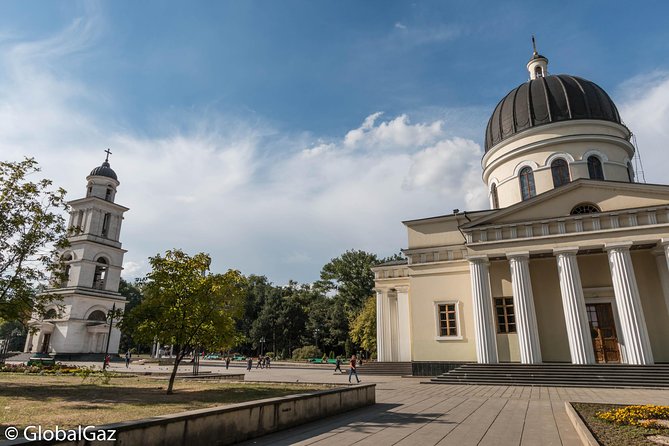
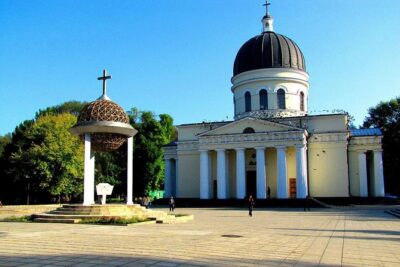
Next door is Cathedral Park, and the dominant construction of the park is the Cathedral Church. This pairing is useful for your mental map. You see the open space for civic life first, then you see the religious landmark that helps define the area’s identity.
One practical note: squares and parks can feel bigger than they look from the sidewalk, so it helps to follow your guide’s timing and keep moving. You will appreciate the next stops more if you do not lose the momentum you need for a packed 3-hour route.
Churches that carry names and eras: Nativity and the Transfiguration Church
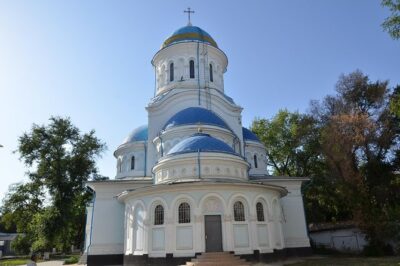
Chisinau’s churches are part of the city’s visual language, and this walk uses them that way. You are set up to admire the Nativity Cathedral and the Transfiguration Church, then zoom into a specific story behind one church that changed names over time.
The Church of the Transfiguration is described as having originally been built in 1902 by an eparchial architect, Mikhail Serotsinsky. The church was initially the church of Saints Constantine and Helen the Equal-to-the-Apostles, and today it carries the name of the Transfiguration. That name shift is the kind of detail that makes a building feel less like a static landmark and more like a witness to changing identities.
If churches are not normally your focus, I still think this is worth it here. Your guide’s commentary helps you notice what to look for, and the short stops keep it from turning into a long, slow detour.
More of Chisinau paced out on foot:
National Opera and Ballet Theatre Maria Biesu: culture with a calendar
The tour includes the National Opera and Ballet Theatre Maria Biesu. The theatre is presented as a real treasure for the Republic of Moldova, and the timing detail is the part I like most: every autumn, opera and ballet celebrities from all over the world come to Chisinau to perform.
That matters because it places the theatre in a living schedule. You are not just seeing a building, you are seeing a city rhythm. If your trip lands in autumn, this is one of those places to plan around.
Even outside performance season, the theatre stop adds variety to the route. After civic buildings and churches, the opera house signals a different kind of importance, one rooted in arts and public prestige.
Civic power on display: Presidential Palace and the surrounding ministry buildings
Next up is the Presidential Palace. It was built in 1990, with the project author listed as Alik Zaltsman. If you care about how modern politics and architecture meet, this stop gives you a clear, specific anchor year.
Just alongside the Presidential Palace is a high-rise building of Agro-industrial Union, where three national ministries have their seats. This is a useful contrast point. You see a symbol of presidential authority next to an office cluster tied to national administration. It is the kind of pairing that helps you read the city’s government zone without needing a map full of explanations.
This part of the walk is also where your guide’s commentary can make or break the experience. A good guide helps you notice which buildings are designed to impress, which are designed to function, and which are designed to communicate messages to the public.
The open-book Parliament and the Hertz building
Once you cross into the other side of the boulevard, the scenery shifts into more architectural surprises. The Parliament of the Republic of Moldova is described as located in a building built in the shape of an open book. That design detail is instantly memorable, and it also tells you how the country frames governance as something meant to be read and understood.
Nearby is the Hertz building, listed as one of the most beautiful constructions on the central boulevard. This is another stop I would not treat as optional. Even if you are not an architecture person, these kinds of facades and public buildings train your eye for what stands out in Chisinau’s streets.
This is also a point where your timing matters. You are walking and listening, so if you stop too long for photos, you can miss the flow into the next stops.
Cinema Patria, plus theatre life at Mihai Eminescu
The walk also includes the Cinema Patria. It is described as the main first show cinema of European level. That wording may sound like marketing, but as a travel detail it still helps, because it tells you this place has been treated as a flagship venue.
Then you reach the National Drama Theatre Mihai Eminescu, described as the largest theatre of the capital city. Mihai Eminescu is a major name in Romanian-language literature, so seeing the theatre paired with the opera house gives you a fuller picture of what the city invests in culturally.
If you are traveling with people who do not want only government buildings and churches, these theatre stops are a good peace offering. They also break up the route so the walk feels varied instead of repetitive.
City Hall and the Organ Hall, where a bank became music
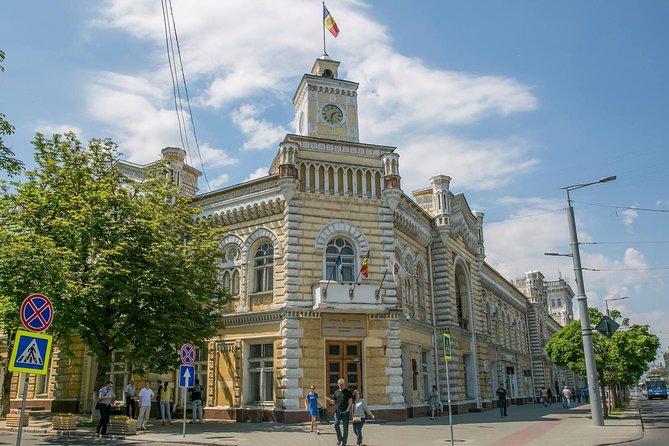
City Hall is a standout stop in the route. The building was erected in 1902 according to a project by the architect Mitrofan Elladi, with participation of Alexander Bernardazzi. That gives the stop more credibility than a generic facade photo.
In the same broader area, you get the story behind the Organ Hall. It was described as a former City Public Bank built in 1911. In 1975, it was restored and transformed into the Organ Hall. That reuse is the kind of city detail you rarely learn if you wander on your own.
This stop also has a practical side for your trip planning. If you are the type who likes live music during a layover, it is worth knowing what repurposed spaces exist in Chisinau, and this is one of the clearer examples on the walk.
Stefan cel Mare Public Park, the monument, and Government House
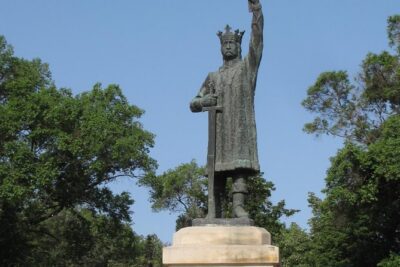
Stefan cel Mare Public Park is described as the oldest park in the Republic of Moldova. At the entrance, there is a monument of the Moldovan voivode and ruler, Stefan cel Mare si Sfint (Saint Stephen the Great). This stop gives you a breath of space after the tighter clusters of buildings.
The tour also mentions the Government House, located in the centre of Great National Assembly Square. So you get the feeling of the state both in the open public square and in the buildings that frame it.
I like this part of the itinerary because it connects symbolism with setting. You see a ruler memorialized at a major park entrance, then you see the seat of government connected to the city’s best-known gathering space.
Open-air vernissage for souvenirs, and what to buy on a walk
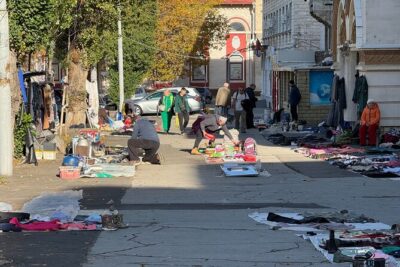
You will be guided toward Chisinau open-air vernissage, described as the best place to acquire some local souvenirs. This matters because it solves a common travel problem. If you wait until the end of the day, souvenir shopping can turn into a scramble. Here, it happens during the route, while you already know what area you are in.
The tour info also notes that souvenir photos are available to purchase, but they are not included. So if you like the idea of a quick photo set, you can treat that as an optional add-on instead of expecting it to be part of the tour fee.
Even if you do not buy anything, this stop adds texture. You get a sense of what everyday commerce looks like in the centre, not only the big monuments.
Price and value: is $52.72 worth it?
At $52.72 per person for about three hours, you are paying for a professional guide, a route that hits multiple major landmarks, and commentary that helps connect the dots between buildings. This is not a long, museum-heavy day. It is a focused highlights walk meant to help you orient and understand the city quickly.
For value, think about what you would otherwise do. Without a guide, you could see the buildings, but you might miss the details that make them meaningful, like the Kilometre Zero marker’s role, the Presidential Palace being built in 1990 with the project author Alik Zaltsman, and the Transfiguration Church’s 1902 origin story.
Also, the tour is bookable in advance, with an average booking window of 42 days. That suggests it is a practical way to lock in one of your first activities in Chisinau, when your questions about the city are at their peak.
Who this Chisinau walk suits best (and who should skip)
This tour is a good match if you want a high-impact orientation to the capital. You will get a compact mix of civic architecture, church landmarks, and major cultural venues, and the walking format means you see how the city streets connect instead of only looking at a few points from afar.
It is also a solid choice if you like learning from live commentary, because the tour is built around that. One review highlighted an engaging guide, Nicolai, and specifically praised how he took the group to the nooks and crannies of Chisinau while keeping the talk animated. That kind of guide energy is exactly what turns a list of landmarks into a story you can remember.
If you dislike walking, or if you want lots of sitting time, then the three-hour format might feel tight. And since meals and drinks are not included, you will want to plan food either before you meet or after you finish.
Should you book the Chisinau Walking City Tour?
If you are visiting Chisinau for the first time and you want a single, efficient way to understand the centre, I would book it. The strongest reason is the combination of major sights in a short walk plus the kind of specific details that make those sights more than postcards.
You might skip it if your idea of a tour is slow pacing, long stops, or a food-centered itinerary. Otherwise, this is an excellent use of an evening in the city.
FAQ
How much does the Chisinau Walking City Tour cost?
It costs $52.72 per person.
How long is the tour, and what time does it start?
The tour is about 3 hours long and starts at 5:30 pm.
Where do we meet, and where does the tour end?
You meet at Hotel Chişinău, Bulevardul Constantin Negruzzi 7, MD-2001, Chișinău, Moldova. The tour ends back at the same meeting point.
What is included in the price?
The tour includes a professional guide.
What is not included?
Souvenir photos and meals and drinks are not included.
How large is the group?
The tour has a maximum of 48 people.
Is there a mobile ticket, and when will I get confirmation?
It includes a mobile ticket. Confirmation is received at the time of booking, unless you book within 1 day of travel, in which case confirmation is received as soon as possible subject to availability.
Can children join, and are service animals allowed?
Children must be accompanied by an adult. Service animals are allowed.
Can I cancel for a full refund?
Yes. You can cancel up to 24 hours in advance for a full refund. If you cancel less than 24 hours before the start time, the amount you paid will not be refunded.
Newest on the Chisinau list
- Private Driver to Bucharest from Chisinau – Kishinev (Moldavia)★ 5.0 · 1 review
- Chisinau: Ladies-Only City Tour with Shopping & Meal★ 5.0 · 1 review
- 2.5 hours Walking City tour Chisinau Moldova★ 5.0 · 1 review
- Visit Chateau Purcari Winery and Marta & Maria Monastery★ 5.0 · 1 review
- Welcome to Chisinau★ 5.0 · 1 review
- Transnistria – Discover Soviet style and inspiration★ 5.0 · 1 review
- Tour of Capriana Monastery, Honey Mansion & Crama Mircești Winery★ 5.0 · 1 review
Chisinau City Tours, compared.

City Tour of Chisinau &Old Orhei Archeological complex
Read our review →
Browse the lists this tour appears in