
Reviewed · TRANSNISTRIA TOURS
Tour of Transnistria
Transnistria feels like a closed time capsule. This tour is interesting because it ties Ottoman stone, Soviet monuments, and the 1992 conflict into one tight route with an English-speaking guide named Tatiana and Bender Fortress included. You get a clear sense of how this breakaway region presents its story in public spaces, from citadel walls to Lenin squares.
I also like how the day is built around specific places, not vague viewpoints. You will move through Bender and then reach Tiraspol by public transport, with several stops where you can slow down and actually read the meaning behind the statues and memorials. One consideration: lunch is not included in the base price, so you should plan for the extra cost and timing that comes with eating where the locals do.
In This Review
- Highlights I’d Write On A Postcard
- Why This Transnistria Tour Feels Different Than A Day Trip
- Price and Logistics: What The $78 Really Buys
- Starting Point in Bender: A Day That Runs Like A Script
- Stop 1: Tighina Fortress in Bender, From 1538 to Today
- Stop 2: Memorial of Remembrance and Sorrow, 1992 Grief Without Noise
- Stop 3: Tiraspol by Public Transport, The Capital That Still Has Soviet DNA
- Suvorov Square and the City’s “Founding Story” Monuments
- The Memorial of Glory, Opened in 1972, With War Burials
- Lenin Monument and Tiraspol City Hall: Soviet Power, Still In Use
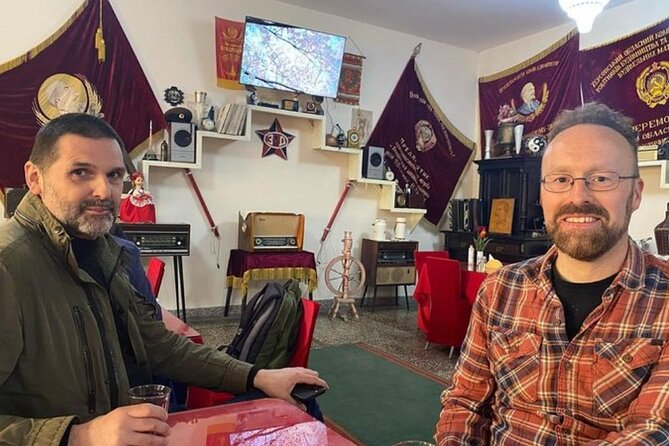
- Cantina URSS (Stolovka USSR): Eating the Soviet Vibe
- Parcani Lunch Option and Timing: Plan For The 13:00 to 14:00 Slot
- What To Watch For: The Real Tradeoffs of a Monument-Focused Day
- Who This Tour Suits Best
- Should You Book This Transnistria Tour?
- FAQ
- How long is the Tour of Transnistria?
- Where does the tour start and end?
- Is the tour in English?
- What is included in the price?
- Is lunch included, and what does it cost?
- Is cancellation free?
Highlights I’d Write On A Postcard
- Bender Fortress admission included, letting you focus on the architecture and the 1538 Ottoman-era start
- English interpretation with Tatiana, plus local storytelling that fits the places you’re standing in
- Tiraspol’s Soviet street theater, from Suvorov Square to multiple Lenin-era memorial stops
- Two Soviet-style food moments, including an atmospheric Stolovka USSR stop
- Memorials with 1992 context, so the monument stops mean something more than photos
More crossings into Transnistria:
- Chisinau: Discover Soviet Heritage of Transnistria
★ 4.9 · 311 reviews - Tiraspol must-see tour with Anton Dendemarchenko – Pridnestrovie
★ 5.0 · 189 reviews - Travel to Pridnestrovie with Anton Dendemarchenko – day tour
★ 5.0 · 187 reviews - Soviet Era Tour of Transnistria from Chisinau Moldova
★ 5.0 · 183 reviews - Back in the USSR – Tiraspol & Bender City
★ 4.9 · 182 reviews
Why This Transnistria Tour Feels Different Than A Day Trip
Transnistria is the kind of place where your brain keeps asking, wait, how did this happen here? That question is the point of the tour. You start in Bender and end back there, with Tiraspol as the big payoff in the second half of the day.
What makes this experience valuable is the way the stops connect. The route goes from fortress walls to grief memorials, then into a capital city that still uses Soviet symbols as part of everyday identity. You are not just driving past landmarks. You are learning why they were put there and what they signal to the people living with them now.
Also, the tour is designed for English speakers, with interpreter guide service included. You’ll want that because the region’s history and politics are not simple, and the guide’s explanations help you follow the thread instead of getting lost in monuments.
Price and Logistics: What The $78 Really Buys
At $78.02 per person for about 7 hours, this is not a cheap “see a few things” ride. You are paying for a guided day, interpretation in English, and (most importantly) an included entrance ticket to the Bender Fortress.
Here is what you should budget beyond the base price. Coffee and/or tea are not included. Lunch is also not included, with a stated option of 15 EUR per person for lunch at a guest house in Parcani, or an alternate Soviet canteen lunch in Bender. If you skip that lunch option or arrive hungry, you’ll feel it fast, because the day is structured around set stops and meal timing.
One more practical note: the tour is offered as a private activity, meaning it is just your group. That can make the day easier for questions and pacing, especially when the topic gets heavy.
Starting Point in Bender: A Day That Runs Like A Script
You meet in Bender, Moldova, and the tour loops back to the same point at the end. The published operating window is 9:00 AM to 4:00 PM, which matters if you are trying to match the day to your other plans in Moldova.
The tour is also described as near public transportation. In practice, that tends to mean you will not need fancy private logistics to get around town stops, but you should still be ready for some walking on stone streets and in monument areas.
If you are coming from the Chisinau area, plan for coordination. One experience description mentions the guide arranging transport to collect people from Chisinau ahead of time. So it can help to confirm your pickup and meeting point details early, especially if you do not want a last-minute scramble.
Stop 1: Tighina Fortress in Bender, From 1538 to Today
The day begins with the Tighina Fortress in Bender. This is the old Bender Fortress on the eastern bank of the Dniester River, with origins tied to the 16th century and the Ottoman period. The construction started in 1538, so you are looking at a site that has been around long enough to absorb many layers of rule and identity.
The included admission is a big deal, because fortress access is often the sort of cost that quietly adds up on budget tours. Here, you can treat the fortress visit as a full stop, not an outside glance.
What I like about this start is that it gives your eyes a reference point. Once you understand how a place was fortified and controlled, the later monument stops feel more meaningful. They are also part of how power is displayed in public space, just in a different era and style.
Practical tip: bring a light layer even in warm months. Fortress stone can cool down in the shade, and you might spend time walking around before and after the main viewing areas.
Another cellar, another road out of Chisinau:
Stop 2: Memorial of Remembrance and Sorrow, 1992 Grief Without Noise
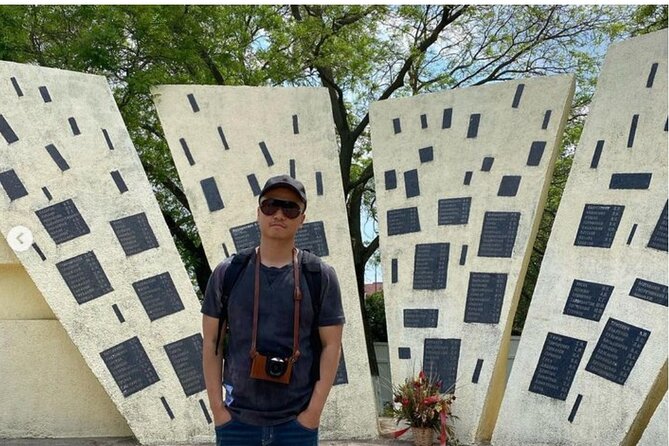
Next comes the Memorial of Remembrance and Sorrow in Bender. This is dedicated to defenders of the city who died during the Transnistrian conflict in 1992.
The time here is short, listed at about 20 minutes, and the admission is free. That means you should treat this stop as a moment to slow down rather than a quick photo break. This is one of those locations where you will get the most from the guide’s context, because a memorial like this is rarely self-explanatory.
A good way to approach it is to ask yourself what the memorial is trying to protect. Names and memory matter here, and if you go in expecting just a symbol, you may miss the point. This stop sets an emotional baseline before the tour moves into the capital’s Soviet imagery.
If you tend to rush through memorials, pause. Take one minute to read what you can, then move on. Otherwise, the stop will feel like an obligation instead of part of understanding the day.
Stop 3: Tiraspol by Public Transport, The Capital That Still Has Soviet DNA
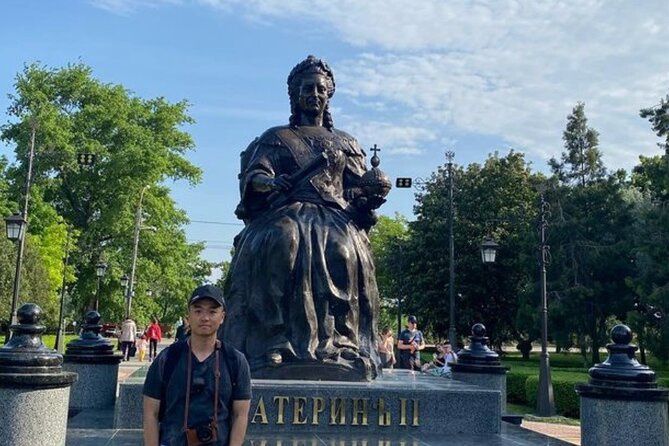
After Bender, you travel by public transport to Tiraspol, the capital of the PMR. The tour framing notes that the city was built by decree of Russian Empress Catherine II, and today it is presented as the capital of a small independent state.
Once you arrive, the focus turns to how the city looks and what it chooses to display. A key detail is that a Lenin monument still stands in central Tiraspol. That sets expectations for the rest of the route. You are not in a region that has fully moved on from Soviet symbolism. The city uses it.
The ride itself is part of the day’s value. Public transport tends to be the most honest way to see how the region functions beyond the tourist bubble. Even if you spend more time looking out the window than taking notes, you still get a feel for everyday rhythm.
Practical tip: bring water and plan for a bit of waiting at transit stops. The tour timetable is structured, but public transport always comes with real-world timing.
Suvorov Square and the City’s “Founding Story” Monuments
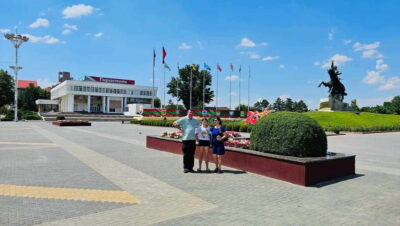
In Tiraspol, you hit several monument stops in quick succession. First is the Suvorov Monument, linked to the Russian Generalissimo credited with founding the city. It is located on Suvorov Square, which makes it easy to orient yourself because the square is designed to be a focal point.
The stop is listed at about 20 minutes, and admission is free. That is enough time to take photos, get the basics from your guide, and understand why Suvorov is part of the city’s origin story narrative.
Then the route moves onward to a bigger memorial complex, so try not to over-focus on one statue. Instead, treat each stop like a clue. Who gets honored, which era gets highlighted, and which names are used to frame the city’s identity.
If you like urban history, this is where the tour starts feeling like a living map. Each statue is a marker for an official memory, not just decoration.
The Memorial of Glory, Opened in 1972, With War Burials
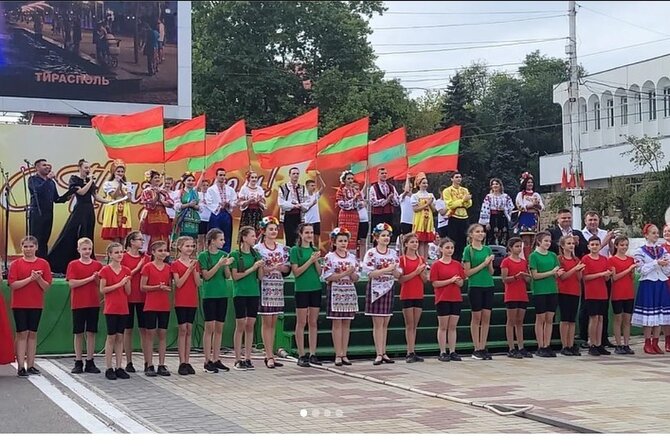
The Memorial of Glory is the main historical and memorial complex in Tiraspol, opened in 1972. Admission is free, with about 30 minutes allotted.
This stop is tied to multiple eras of conflict. The memorial includes burials of participants in the Civil War, the Great Patriotic War, and participants in the defense of Transnistria in 1992.
That mix of time periods is important. It shows how the region connects earlier Soviet-era wars to its more recent conflict narrative. You can walk away with a clearer idea of how people are asked to remember history across different decades.
If you are the type who likes to understand meaning instead of just collecting photos, spend the full 30 minutes. Look slowly at what is emphasized. Then listen to your guide’s framing, because the same architectural language can mean different things depending on who is telling the story.
Lenin Monument and Tiraspol City Hall: Soviet Power, Still In Use
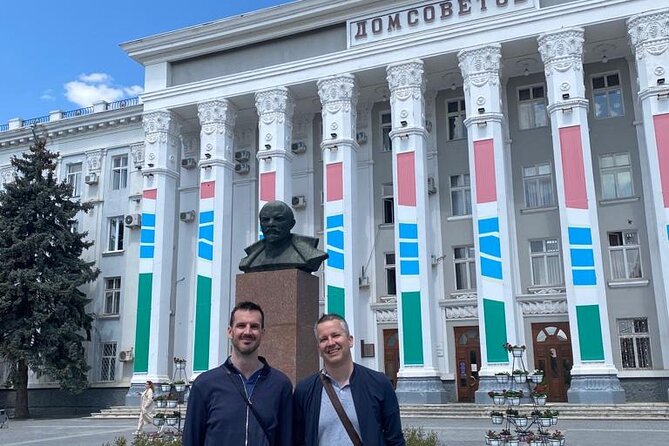
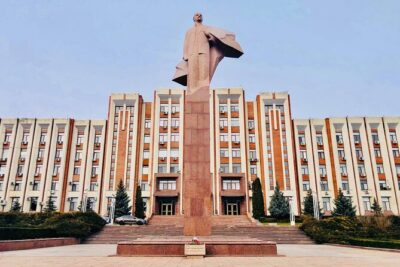
The tour continues to a Lenin Monument, erected in 1987 and located in front of the building of the Supreme Council and the Government of the PMR. This is listed at about 30 minutes, and admission is free.
This matters because it is not just a statue in a park. It is placed facing official governance buildings. The message is hard to miss: Soviet symbolism remains tied to authority.
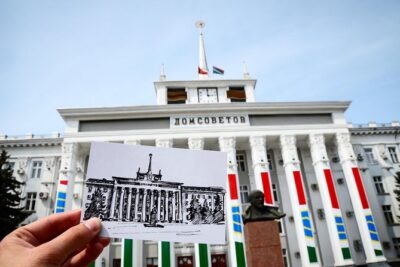
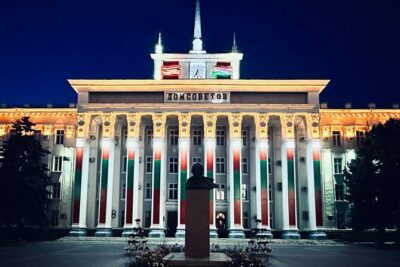
Next you visit Tiraspol City Hall, described as the House of Soviets and an architectural monument of Stalinist Empire style. The building now houses the city council of Tiraspol. The stop is about 20 minutes and admission is free.
I like this part because it makes the Soviet era feel less like an old museum. You are looking at a structure that still functions for civic life. That contrast can be unsettling if you expect history to freeze in place. Here, it is still doing work.
Cantina URSS (Stolovka USSR): Eating the Soviet Vibe
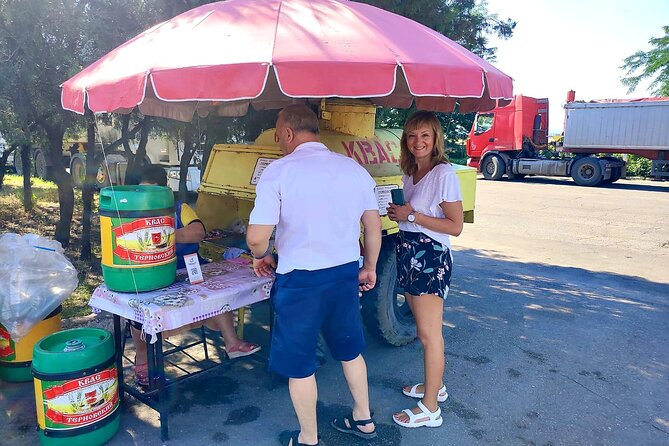
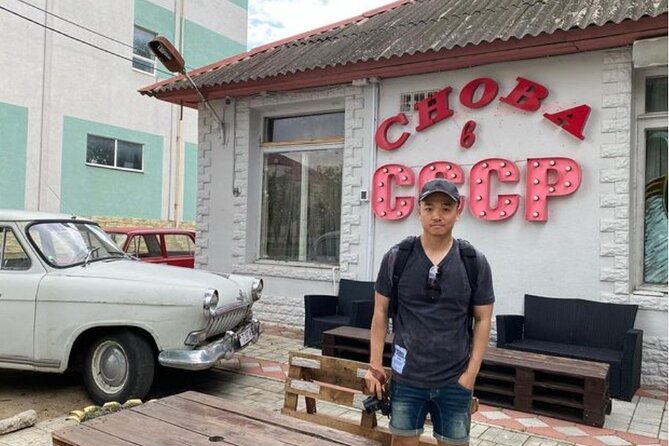
Between the monument-heavy stops, you get a break at Cantina URSS, with a focus on the Soviet-style experience. The stop is about 20 minutes, and admission is not included, meaning you pay for what you order.
Even with just a short visit, this is one of the more memorable “feel” moments of the day. The point is not gourmet food. It is atmosphere, the visual cues, and the chance to see how a Soviet-themed cafe fits into modern routines.
In one detailed experience description, the cafe is described as an atmospheric time capsule of Soviet times. That kind of place is worth sampling because it gives you a sensory layer your photos cannot capture.
Practical tip: if you are picky about food or have dietary restrictions, check with your guide on what you can realistically order. The tour data does not list specific menu items, so you’ll need to rely on what is available at that moment.
Parcani Lunch Option and Timing: Plan For The 13:00 to 14:00 Slot
Lunch happens between 13:00 and 14:00 in Parcani at a guest house, or alternatively in a Soviet canteen in Bender. The Parcani guest house option is listed as 15 EUR per person.
The tour timing gives you a real break in the middle of the day, but it also means you should come hungry. If you snack too early, the lunch stop will feel less satisfying, and you may end up craving more later.
One experience description highlights a host family lunch and mentions homemade wine, cognac, and vodka served by the father, with the mother making lunch. That kind of hospitality can turn lunch into the emotional anchor of the tour, not just fuel.
Just keep expectations practical. Wine and spirits might be offered, and your tolerance is your choice. If you do not want alcohol, be clear. This tour includes the vibe of a home-style welcome, but you still control what you consume.
What To Watch For: The Real Tradeoffs of a Monument-Focused Day
This is a monument-forward tour, so your feet will do a fair amount of work. The listed stops are mostly walking and standing around sites in Bender and Tiraspol, with a few short photo windows. If you love museums with indoor flow, you might find some parts too exterior-heavy.
One other consideration is language fit. The tour is offered in English, but there was at least one past situation where an English-speaking leader had to cover when a different language was expected. To avoid surprises, confirm language details during booking and ask how interpretation will be handled for your group.
Lastly, the day can feel intense because it stacks fortress, memorial, then multiple Soviet-era stops. That is not a bad thing. It just means you should pace yourself. Take 20 seconds at each memorial and statue to reset, and you will come out with a clearer understanding instead of information overload.
Who This Tour Suits Best
This tour suits you if you want an authentic, English-friendly way to experience Transnistria beyond the border-town postcard. It is also ideal if you like political geography shown through architecture, not just explained in theory.
You will likely enjoy it if you are the type who reads plaques, pays attention to placement, and cares about why a city chooses certain symbols in front of certain buildings. The route connects Ottoman fortress origins, a 1992 memorial, and Soviet governance imagery in a way that feels purposeful.
If you are traveling with limited time and want a single structured day that hits major points, this is a strong option. It is also private, so your group can move at a pace that works for you.
If you hate walking, need frequent indoor rest breaks, or want mostly open-air scenery without monuments, you might want to compare options. The core value here is the memorial and statue stops.
Should You Book This Transnistria Tour?
I think you should book it if your priority is meaningful context and a guided route through Bender and Tiraspol, with Bender Fortress admission included. The blend of fortress history, the 1992 remembrance stop, and Soviet-era monuments is exactly the kind of combo that turns a place into a story you can repeat later.
Book it especially if you appreciate an English-speaking guide like Tatiana and you want the day to feel more personal than a standard bus circuit. The lunch experience can also be a highlight if you enjoy home-style hospitality, even if you should budget for the extra lunch cost.
You might skip it if you want a fully relaxed day with lots of free time, because the schedule is stop-based and lunch is a paid add-on. Also, if you are very sensitive to alcohol being offered during lunch, plan your communication ahead.
If you want a Transnistria day that actually explains what you are seeing, this one is a solid choice.
FAQ
How long is the Tour of Transnistria?
The tour lasts about 7 hours.
Where does the tour start and end?
It starts in Bender, Moldova and ends back at the same meeting point.
Is the tour in English?
Yes, it is offered in English and includes an interpreter guide service.
What is included in the price?
The tour includes services of an interpreter guide and entrance to the Bender fortress. Admission to other sites listed on the route is free, while the Soviet-style cafe is not included.
Is lunch included, and what does it cost?
Lunch is not included. There is an option for lunch in Parcani with a guest house at 15 EUR per person, or lunch in a Soviet canteen in Bender.
Is cancellation free?
Yes, you can cancel up to 24 hours in advance for a full refund. If you cancel less than 24 hours before the start time, the amount paid is not refunded.
Newest on the Chisinau list
- Private Driver to Bucharest from Chisinau – Kishinev (Moldavia)★ 5.0 · 1 review
- Chisinau: Ladies-Only City Tour with Shopping & Meal★ 5.0 · 1 review
- 2.5 hours Walking City tour Chisinau Moldova★ 5.0 · 1 review
- Visit Chateau Purcari Winery and Marta & Maria Monastery★ 5.0 · 1 review
- Welcome to Chisinau★ 5.0 · 1 review
- Transnistria – Discover Soviet style and inspiration★ 5.0 · 1 review
- Tour of Capriana Monastery, Honey Mansion & Crama Mircești Winery★ 5.0 · 1 review
Transnistria Tours, compared.
Tiraspol must-see tour with Anton Dendemarchenko – Pridnestrovie
Read our review →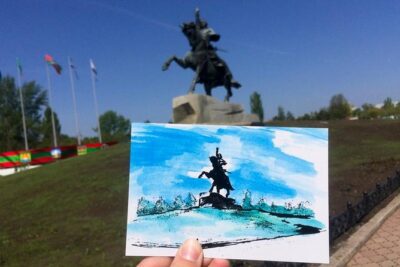
Travel to Pridnestrovie with Anton Dendemarchenko – day tour
Read our review →
Soviet Era Tour of Transnistria from Chisinau Moldova
Read our review →
Browse the lists this tour appears in